Manufacturing businesses often operate in specialised markets where purchase cycles are long and prospective buyers rely heavily on research. Before contacting a supplier, decision‑makers spend hours evaluating capabilities, reading reviews and comparing options. Local SEO is the bridge between your factory floor and these online researchers. When implemented correctly, it acts as a digital fingerprint, signalling your presence to algorithms and humans alike. This article expands on the basics of local SEO —NAP consistency and Google Business Profile optimisation—by exploring why these elements matter, how to implement them effectively and how to leverage community involvement and reviews to build enduring trust.
Why NAP Consistency Is Foundational
Name, Address and Phone number (NAP) consistency serves as the cornerstone of local SEO. Search engines aggregate business information from directories, social platforms and citations; mismatched data confuses algorithms, reducing confidence and suppressing rankings . For manufacturers, where sales often involve large contracts, ensuring that every listing—from major aggregators like Data Axle and Localeze to niche industry directories—displays identical contact details is critical. Inconsistent NAP data can lead potential clients to outdated addresses or wrong phone numbers, undermining trust before a conversation even begins.
Step‑by‑Step Guide to NAP Consistency
Create a master listing document. Compile an official record of your company’s legal name, trading name (if different), address, phone number, email and website URL. Include variations (e.g., “Ltd.” vs. “Limited”) and choose one standard for all listings.
Audit your current citations. Use tools like BrightLocal, Moz Local or Whitespark to scan the web for existing citations. Document discrepancies in names, addresses and phone numbers. Prioritise corrections on high‑authority directories first.
Correct and claim listings. Claim your business on Google Business Profile (GBP), Apple Maps, Bing Places, Facebook, Yelp and industry‑specific platforms. Remove duplicate entries and update each with the exact NAP from your master document. Provide additional details such as business hours, services offered and payment methods.
Standardise on your website. Ensure your NAP appears consistently in the header, footer and contact page. Use the org/LocalBusiness markup to include structured data for search engines .
Automate with management tools. Consider services like Yext, Synup or Uberall to synchronise listings across platforms and monitor for changes. While these tools require investment, they save time and reduce manual errors.
Optimising Your Google Business Profile (GBP)
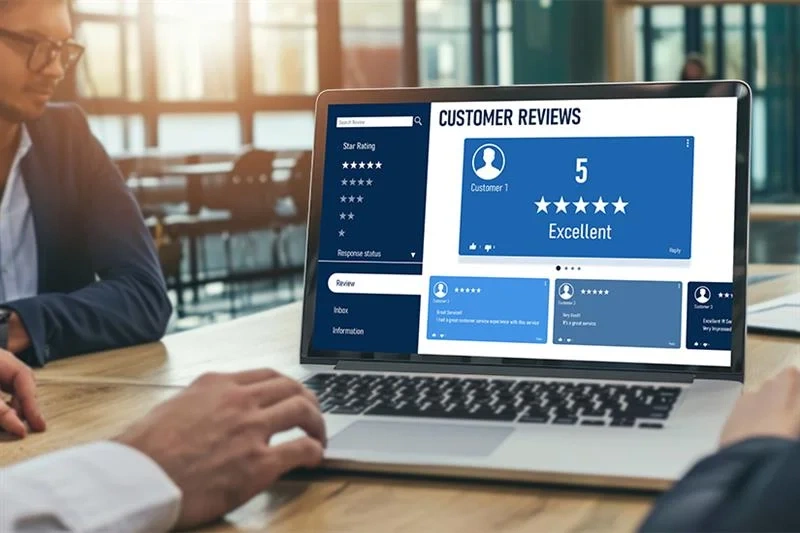
Your GBP is often the first touchpoint for potential buyers researching suppliers. According to BrightLocal’s 2025 Local Consumer Review Survey, 83 % of consumers read reviews on Google before contacting a business, and 89 % expect the owner to respond to reviews 24 . For manufacturers, an optimised GBP can showcase capabilities, build credibility and drive inquiries.
Key Elements to Optimise
Primary and secondary categories. Choose categories that accurately reflect your services. For example, a company specializing in PCB assembly should select “Electronics Manufacturer” as the primary category and “Contract Manufacturer” as a secondary category. Avoid irrelevant categories that can misalign search intent.
Complete business information. Fill out attributes such as hours of operation, website URL, phone number, and service area. Use the business description to summarise your unique value proposition and include relevant keywords naturally.
High‑quality images and videos. Upload photos of your facilities, equipment, products and team. Include short videos of manufacturing processes or product demonstrations. High‑resolution visuals enhance user engagement and signal authenticity .
Posts and updates. Use GBP Posts to share updates, special promotions, case studies, industry certifications or participation in trade shows. Posting regularly signals activity and can improve local visibility.
Reviews management. Encourage satisfied customers to leave reviews. Respond promptly and professionally to all reviews—thank those who leave positive feedback and address negative comments constructively. Google’s local algorithm rewards businesses that actively engage with reviewers .
Nested department listings. If your manufacturing company offers multiple service lines (e.g., PCB assembly, box‑build assembly and testing), take advantage of Google’s nested department feature to create individual profiles for each service. This improves visibility for specific service queries while maintaining a unified brand.
Creating Localised Content & E‑E‑A‑T Signals
While accurate listings help search engines understand where you are, localized content proves why customers should choose you. To strengthen E‑E‑A‑T and engage local audiences:
Publish location‑specific case studies and projects. Highlight challenges and solutions for clients in specific cities or industries. Include client testimonials and quantifiable results to demonstrate expertise and trust.
Cover local events and news. Share blog posts about attending trade shows, sponsoring community events or collaborating with regional universities. Local engagement signals authenticity and authority.
Create “Ultimate Guides” for nearby clients. For example, “Choosing the Right Electronics Manufacturer in Ahmedabad” could cover selection criteria, regulatory considerations and FAQs. Use internal linking to related service pages to create a content ecosystem.
Implement structured data. Use schema types such as Organization , Product and Review to provide search engines with explicit context. This improves your chances of appearing in rich snippets and AI Overviews.
Community Involvement & Trust Building
Local SEO isn’t just about citations; it’s about being part of your community. Building trust requires genuine engagement:
Participate in local industry associations. Join manufacturing associations, chambers of commerce and trade groups. This fosters relationships and often leads to backlinks from high‑authority sites.
Support community initiatives. Sponsor local engineering competitions, vocational training programs or charitable events. Share these initiatives on your website and social media to demonstrate corporate social responsibility.
Encourage employee advocacy. Empower employees to share their experiences on social media, attend career fairs and speak at local universities. Authentic voices build credibility and attract talent.
Respond to community conversations. Monitor social platforms and forums (e.g., Reddit, local Facebook groups) for discussions related to electronics manufacturing or supply chain challenges.
Offer helpful insights without overtly selling your services.
Future Trends: Voice Search & Hyperlocal Optimisation
The rise of voice assistants and hyperlocal search means manufacturers must adapt their local SEO strategies. Voice searches are often conversational (e.g., “electronics manufacturer near me open now”) and require natural language optimisation. Ensure your content answers these queries in the same phrases users speak. Hyperlocal SEO leverages geographic modifiers (neighbourhood, district names) and emphasises proximity. To prepare, consider creating content around local landmarks or client testimonials that mention specific regions.
Conclusion
Local SEO is a long‑term investment that pays dividends in visibility and trust. By maintaining NAP consistency, optimizing your Google Business Profile and engaging with your community, you position your manufacturing business as a reliable partner. Combining accurate data with localized content and active reputation management helps you outperform competitors and build meaningful relationships with buyers. With voice search and hyperlocal queries on the rise, now is the time to solidify your local presence and prepare for the future.